
- Roofing Guidance
- Roof Systems
Silicone Coating: Restoration, Not a Cheap Replacement
Silicone roof coatings get pitched two very different ways in this market. One version is an honest restoration strategy that extends a sound aging roof's life for a fraction of tear-off cost. The other version is a thin spray job dressed up to look like a full restoration, sold to an owner who doesn't know what dry film thickness they're supposed to be getting. Both look identical the day the crew leaves.
What a Silicone Coating Actually Does
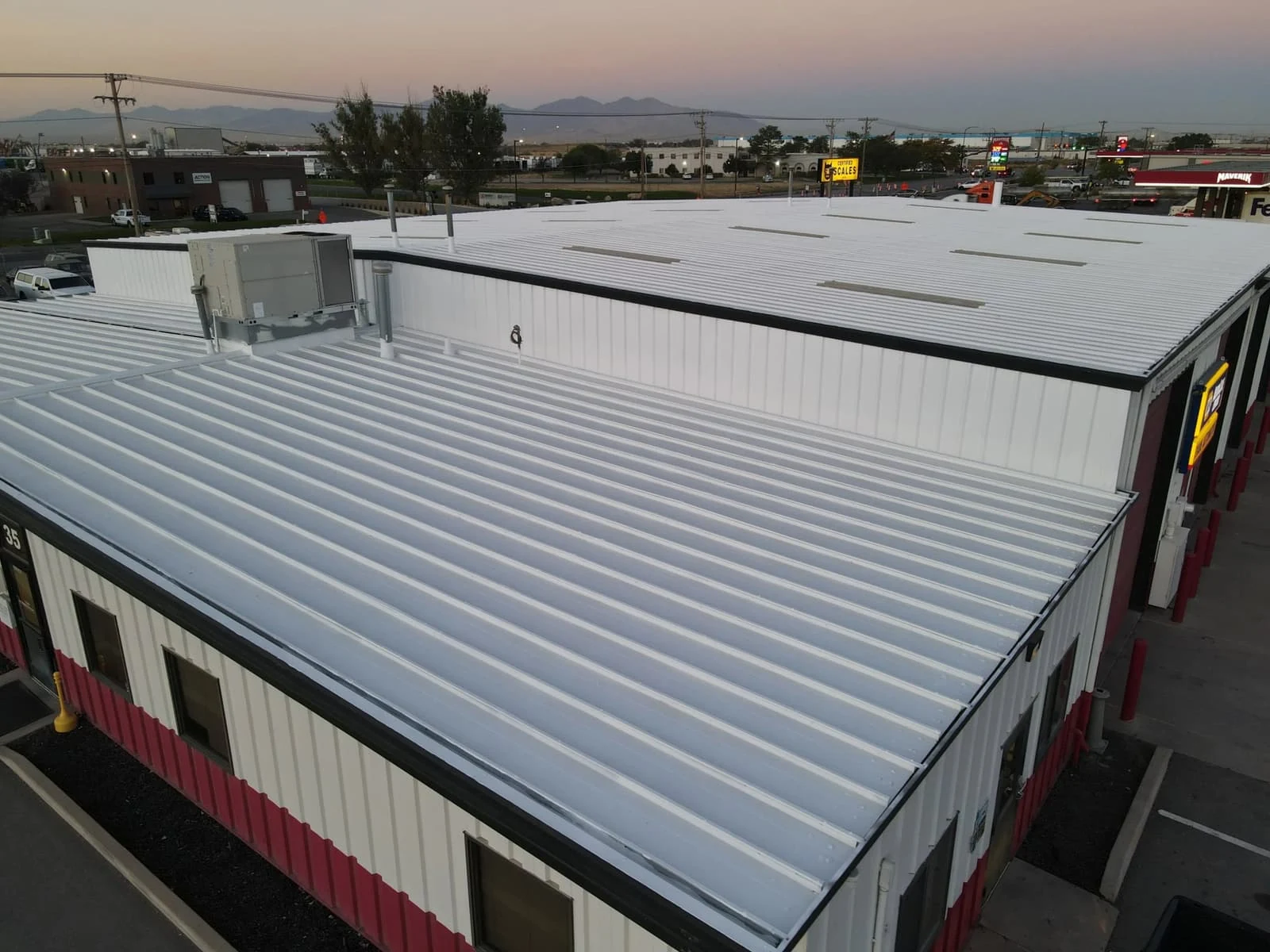
A silicone coating is a liquid-applied membrane sprayed or rolled over an existing roof surface, curing into a single continuous elastomeric layer. It restores UV protection to a weathered membrane, adds reflectivity if it's a white or light-colored formulation, and - silicone's real advantage over other coating chemistries - resists ponding water without breaking down the way acrylic coatings can under prolonged standing water exposure. On a roof with a few chronic low spots that never quite drain, that ponding resistance is the deciding factor for choosing silicone over a cheaper acrylic alternative.
It's a restoration product, not a new roof. It works on a membrane that's still structurally sound and reasonably dry underneath, not on a roof that's already saturated or has failed seams letting water into the insulation.
Dry Film Thickness Is Where the Scope Game Happens
Coating manufacturers specify a minimum dry film thickness, measured in mils, required for the coating to perform to its rated warranty. That thickness is achieved by applying a specific wet-mil volume of coating per square, and it's entirely possible to spray a roof that looks fully coated while applying well under the specified rate, especially at a lower price point where a bidder is trying to hit a number instead of a spec.
A thin coat looks the same as a proper one on installation day and for maybe the first year or two. The difference shows up when UV protection and elasticity start failing early because there simply isn't enough material there to do the job over the coating's rated service life. We ask for the coverage rate in gallons per square documented in the bid, rather than just the manufacturer's product name, and we verify it with wet-mil gauge readings during application, not after the fact when there's no way to check.
Infrared Moisture Scan Before Anything Gets Sprayed
Coating over a roof that already has trapped moisture in the insulation seals that moisture in permanently, and it will keep degrading the insulation and deck from underneath while the coating on top looks fine. An infrared moisture scan, done at night when the roof surface temperature differential shows wet insulation clearly, tells us where moisture is already trapped before we commit to a coating strategy on that area.
Any bid for a coating job that skips the moisture scan is a bid that's guessing. We've found significant wet insulation areas on roofs that looked visually sound from the surface, and coating over those spots would have locked the problem in rather than solving it.
- Infrared moisture scan completed before coating, with wet areas cut out and repaired first
- Dry film thickness specified in mils, tied to the manufacturer's warranty requirements
- Coverage rate in gallons per square documented in the bid, rather than just a product name
- Base coat and top coat system, if the manufacturer's spec calls for two distinct layers
- Substrate compatibility confirmed for the existing membrane type before coating
- Warranty terms tied to verified dry film thickness, with the verification method spelled out
Where Silicone Coating Makes Sense
A TPO or EPDM roof in the middle third of its expected service life, showing UV wear and reduced reflectivity but no widespread seam failure or wet insulation, is a strong candidate for a coating restoration. So is an older built-up or modified bitumen roof with intact plies but a weathered, chalking surface. Coating buys years of service life at a fraction of full replacement cost, which matters on buildings where the owner isn't planning to hold the property long enough to justify a full tear-off.
It's the wrong call on a roof with widespread seam failure, extensive wet insulation, or a deck already showing deflection. Coating doesn't fix any of those problems - it just makes them harder to diagnose later because the surface underneath is no longer visible for inspection.
Ponding Water and Ogden's Drainage Reality
A fair number of older flat roofs in this area have drainage that was adequate when the building was new but has since fallen behind as decks settle and low spots develop. Silicone's tolerance for standing water makes it a practical stopgap on a roof with chronic ponding while a longer-term drainage fix - additional drains, tapered insulation, or a full re-roof with corrected slope - gets planned and budgeted. It's not a permanent solution to a drainage problem, but it buys time without the roof failing in the meantime.
Common Questions on Silicone Coatings
How long does a silicone coating last?
A properly applied coating at the correct dry film thickness typically extends service life for a meaningful number of years, though the exact term depends on the manufacturer's product and warranty tier selected.
Can silicone coating fix a leaking roof?
It can address surface-level UV degradation and reflectivity loss, but it won't fix active leaks caused by failed seams or damaged flashing. Those need repair before coating, not coverage by it.
Is silicone coating cheaper than tear-off replacement?
Generally yes, often a fraction of full replacement cost, which is why it's attractive on roofs that are structurally sound but cosmetically and UV-worn.
How do you know if my roof qualifies for coating instead of replacement?
An infrared moisture scan and a visual inspection of seams and flashing tell us whether the roof is dry and structurally sound enough to coat, or whether it needs repair or replacement first.
Does silicone coating handle Ogden's snow load and ponding well?
Yes, silicone's resistance to standing water is one of its strongest advantages over acrylic coatings, which can degrade under prolonged ponding common on older, less-sloped roofs in this area.
Questions About Silicone Roof Coatings in Ogden, UT
Ready to Review the Roof?
Roof Systems
Silicone roof coating restoration for aging Ogden commercial membranes: dry film thickness, ponding water resistance, and what a moisture scan finds first.
Plan the Next Step