
- Roofing Guidance
- Commercial Project Types
Manufacturing Plant Roofing From Hill Field to the Brigham City Corridor
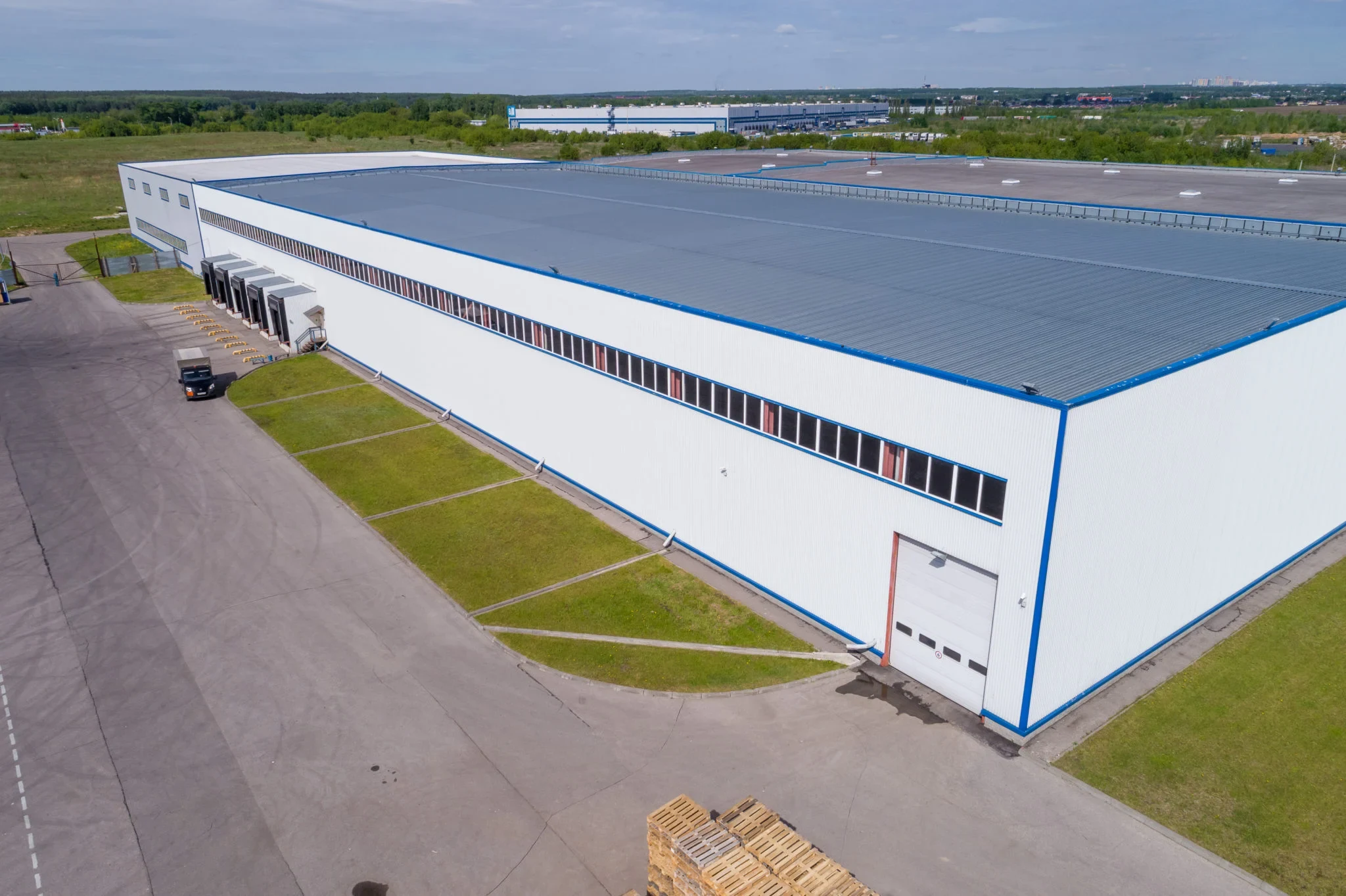
Plant roofs along this stretch of the Wasatch Front carry more hardware than most people realize until they get up there with a tape measure. Between the aerospace and defense suppliers ringing Hill Air Force Base, the Autoliv complex up in Brigham City, and the production tenants inside Business Depot Ogden, we spend a lot of our week walking roofs with exhaust stacks, dust collectors, and process piping bolted straight through the membrane.
Why a Production Roof Reads Differently Than a Warehouse Roof
A distribution building has forklifts and racking underneath it. A manufacturing plant has paint booths, makeup-air units, compressed-air lines, and sometimes hazardous-material exhaust running through the deck. Every one of those penetrations is a place water can find a way in, and every one of them was probably cut into the roof years after the original installation by a mechanical contractor who was not thinking about long-term membrane life.
Before we talk systems or pricing, we walk the interior first if we can get access. Staining on ceiling tile below a curb, rust streaks down a column, or a maintenance log full of the same bucket-and-mop repair tells us more than a satellite photo ever will. Plant engineers usually already know where the roof is failing. Our job is confirming why, and whether the fix is a targeted repair or something bigger.
Canyon Wind and Long-Span Roof Movement
Wind coming down through Weber Canyon and Ogden Canyon hits these industrial buildings broadside, and a lot of the plant roofs out here are wide, low-slope spans with minimal internal bracing at the membrane level. Add heavy lake-effect snow off the Great Salt Lake sitting on a low-slope roof for weeks at a time, then a hard freeze-thaw cycle, and you get exactly the kind of membrane fatigue that shows up as split seams around rooftop units rather than a dramatic single failure.
That combination is why we care about fastening patterns and edge detail on these roofs more than the brand name printed on the membrane roll. A perimeter that was never engineered for uplift in the first place will fail in the same spot every winter no matter how many times it gets patched.
What a Cheap Manufacturing Roof Quote Usually Leaves Out
We review a lot of other contractors' proposals because plant managers ask us to look them over before signing. The pattern is consistent: the number looks great until you read the exclusions, and by then the bid meeting is already over.
- Curb flashing and counter-flashing on existing rooftop equipment, priced as an add-on once the crew is already up there
- Wet insulation removal, quoted as a per-board allowance that never covers what a plant roof with 20 years of leaks actually has
- Deck repair around old penetrations that were patched with foam and never properly closed out
- Off-hours or weekend labor premiums for lines that cannot go down during a shift
- Fire-watch or hot-work permitting costs on sites near flammable storage or paint operations
- Coordination with a plant's existing fire suppression system tie-ins at the roof deck
None of that is dishonest exactly, it is just left off the first page so the number wins the bid. We would rather put it in writing up front and lose a job on price than have a plant manager find out mid-project that the scope tripled.
Keeping Production Running While the Roof Gets Worked On
A manufacturing line that cannot go dark changes how we sequence a reroof. We section the roof, tie in temporary dry-in at the end of every work period, and coordinate crane or lift windows around shift changes instead of around our own convenience. On a lot of these Business Depot Ogden and Freeport-adjacent buildings, loading docks and truck court access matter as much as roof access, so we plan staging with the facilities team rather than just showing up with a dumpster.
System choice depends on what is already up there. A mechanically fastened TPO membrane handles the wide clear spans common in this corridor and gives us welded seams around the equipment penetrations that cause the most trouble. On older built-up or modified bitumen roofs where the deck and insulation are still sound, a silicone restoration coating can buy years of service life at a fraction of tear-off cost, provided the ponding areas get corrected first instead of coated over.
Reading the Roof Before We Write a Number
Every plant roof estimate we write starts with a walk, not a satellite measurement. We check membrane condition at the curbs first, since that is where failure starts on almost every industrial roof we have seen in this valley. We probe insulation near roof drains and low spots, check flashing height against code minimums, and photograph anything that looks like a prior repair that was never sealed correctly.
From there we write a scope that separates what needs attention now from what can be scheduled into next year's capital budget. A manufacturing facility rarely has the luxury of an open-ended roof replacement window, so the report we hand over is built to help a plant manager make the case to ownership or corporate for the dollars, not only to sell a job.
Questions Plant Managers Ask Us
Can you inspect a manufacturing roof without shutting down production?
Yes. Most roof inspections happen from the exterior and roof deck without touching interior operations. We coordinate access windows around your shift schedule when equipment or safety procedures require it.
How do you handle roofs with active exhaust and process penetrations?
We document every curb and penetration separately, since each one is its own flashing detail. Manufacturing roofs fail penetration by penetration more often than across the whole field of membrane.
What is the biggest difference between repairing and replacing a plant roof?
Deck condition and how much wet insulation is trapped underneath matter most. If the substrate is sound, targeted repair or a coating system can extend service life. If insulation is saturated across large sections, patching just delays a bigger bill.
Do you work around Hill AFB security and access requirements?
We coordinate with site security procedures for any facility that requires escort, badging, or restricted-area protocols before crews are scheduled.
Why does my current bid look cheaper than yours?
Usually because it excludes curb flashing, wet insulation removal, deck repair, or off-hours labor and adds them back in later as change orders. We would rather show that cost up front.
Questions About Manufacturing Plant Roofing in Ogden, UT
Ready to Review the Roof?
Commercial Project Types
Manufacturing plant roof inspection, repair, and replacement for production buildings from Business Depot Ogden to the Brigham City corridor near Hill AFB.
Plan the Next Step