- Roofing Guidance
- Service Areas
Commercial Roofers in Farmington
A practical commercial roofing plan for Farmington properties separates urgent leak control from repair, coating, maintenance, and replacement decisions supported by photos and condition findings. Farmington carries two roof markets that rarely get compared to each other but should be: the big-format retail and mixed-use roofs at Station Park, and the older civic and administrative buildings that come with being the Davis County seat. We bid both, and the mistakes we catch on one side usually rhyme with the mistakes on the other.
Station Park's Roofs Are Bigger Than They Look From the Street
From the parking aisles, Station Park reads as storefronts and string lights. From the roof, it is acres of low-slope membrane broken up by rooftop units, dozens of curbs, and drainage that has to move a lot of water off a flat field fast during a spring melt. A single anchor tenant's roof can carry more penetrations than an entire strip center in a smaller town, and every one of those penetrations is a place a quote can quietly get thinner than it looks.
The scope game we see most on lifestyle-center work is the walk pad line item disappearing. A tenant's HVAC contractor services those rooftop units constantly, and foot traffic without protection wears a membrane down in the exact spots you can't see from a drive-by inspection. If a bid doesn't call out walk pad placement around every serviced unit by name, ask why.
What a Real Station Park Bid Should Spell Out
We tell tenants and property managers to read a bid the way you'd read a lease: line by line, not headline by headline. A number that looks competitive on page one can hide a scope that's missing half the work needed to make the roof last its warranty term.
- Tear-off tonnage and disposal cost stated as its own line, not folded into "labor"
- Insulation R-value and thickness specified by product name, not "code minimum"
- Every roof drain and scupper listed individually with a retrofit or clean-out plan
- Walk pad protection at every rooftop unit and access point
- Parapet and coping flashing detail described, not merely "flashing as needed"
- Manufacturer material warranty term separated clearly from the installer's own workmanship warranty
When those six lines are missing, the bid usually isn't cheaper because the contractor is more efficient. It's cheaper because six things aren't in it, and you find out which ones during the second winter.
Davis County Buildings and the Low-Bid Trap
Public buildings in the county seat run through a bid process that rewards the lowest number on the page, which is reasonable on paper and rough in practice. A contractor who wins on price alone has two ways to make the number work: cut into their own margin, which is rare, or cut into the scope, which is common. The change order that shows up in month three is usually for something that should have been priced in month one.
We've reviewed county facility roof scopes where the original bid never mentioned removing and rebuilding deteriorated wood blocking at the parapet edge. That's not an unusual finding on a building of that age. It's a predictable one, and a bid that doesn't account for it isn't really a bid on the roof you actually have.
Snow Load Off the Bench, Wind Down the Canyon
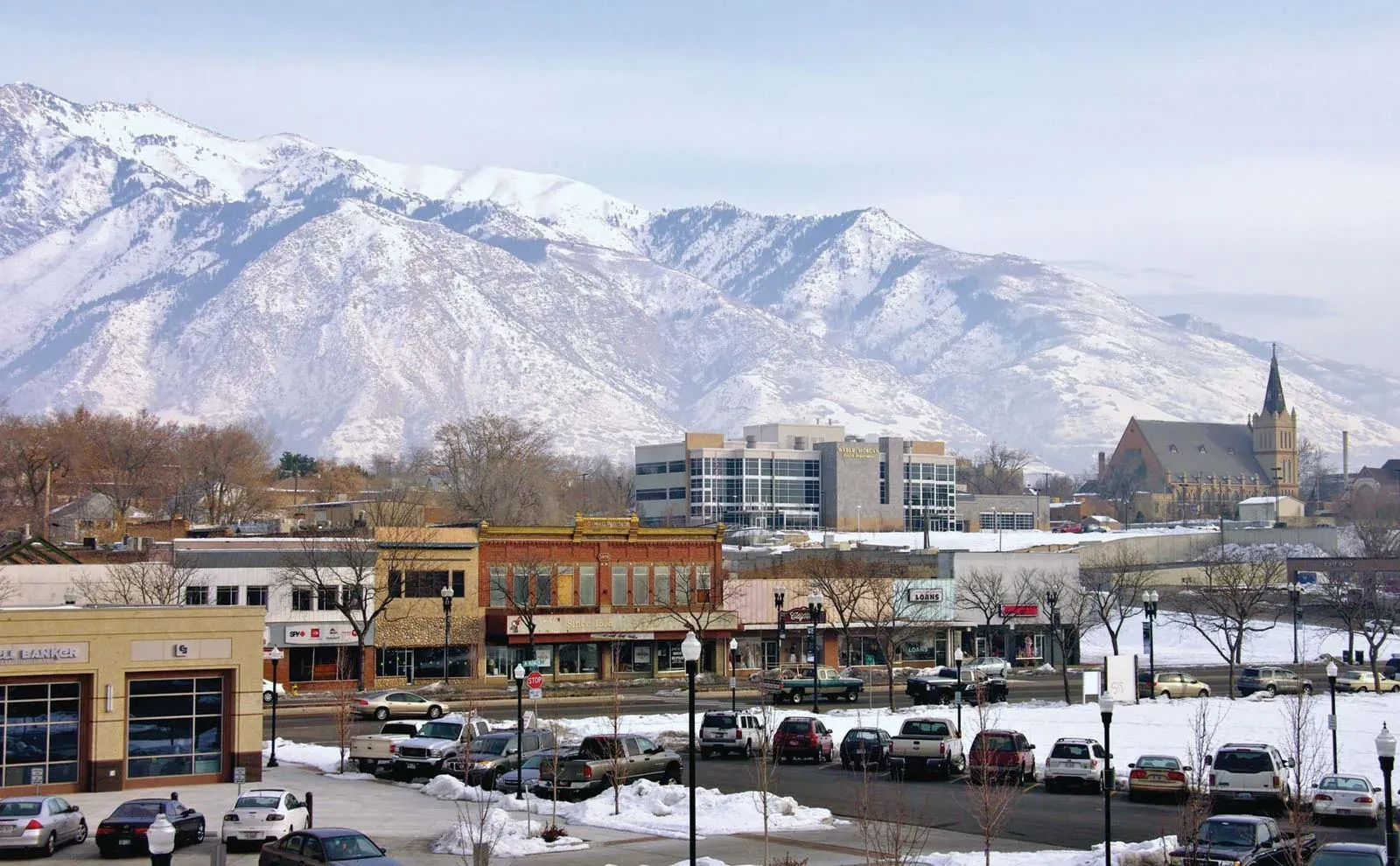
Farmington sits where the Wasatch bench narrows and Farmington Canyon opens onto the valley floor, which means roofs here deal with both heavy accumulated snow load and gusting canyon wind events that can hit a parapet edge from a direction a standard flashing detail wasn't built for. A roof spec that works fine in a sheltered part of the valley can underperform right at this pinch point.
Edge metal and coping fastening patterns matter more here than the spec sheet default. We look at how a system anchors at parapet corners specifically, because corner uplift is where canyon-wind failures start, not across the open field of the membrane.
Recover or Full Tear-Off
Not every roof at Station Park or in the older municipal buildings needs a full tear-off. Where the existing insulation is dry and the deck is sound, a recover system can be the honest answer, and it's cheaper than a full replacement. Where moisture has already gotten into the insulation layer, recovering over it just seals the problem in. We test before we recommend either way, and we'll tell you plainly which situation you're in.
The test itself takes a morning, not a week, using the same infrared or core-cut method we'd run on any low-slope roof in the valley. What changes at Station Park is timing: retail tenants don't want tear-off noise and material staging happening in the weeks before a holiday shopping stretch, so we build the testing and decision into the schedule early enough that construction, if it's needed, lands in a slower retail month instead of the busiest one.
Answering What Farmington Property Managers Ask Most
Why do two bids for the same Station Park roof come in so far apart?
Almost always scope, not skill. Pull both bids side by side and compare line items, not totals. The gap usually traces back to missing drain work, missing walk pads, or a thinner insulation spec than what's actually needed for the roof's use.
Can retail roof work happen without disrupting tenants?
Yes, with sequencing. We stage tear-off and dry-in sections so no tenant sits exposed overnight, and we coordinate around store hours and delivery schedules rather than working on our own timeline.
Do county or municipal buildings need a different roof system than retail?
Not necessarily a different system, but often a different repair philosophy. Older civic buildings tend to have accumulated small deferred issues that need documenting and addressing as part of the project, not left for the next bid cycle.
How do you handle drainage on a roof this flat?
We map ponding after a rain event before writing a scope, not after. Tapered insulation or drain relocation gets specified based on where water actually sits, not where the original design assumed it would go.
What warranty should a Farmington property actually get?
Ask for both documents separately: the manufacturer's material warranty and the installer's workmanship warranty. A long manufacturer term paired with a short or vague workmanship term still leaves you exposed on installation errors.
Questions About Commercial Roofing Contractors Farmington, UT
Ready to Review the Roof?
Service Areas
Commercial roofing contractors serving Farmington, UT with commercial roof repair, replacement, coatings, maintenance programs, inspections, and documented roof reports.
Plan the Next Step